
As an Amazon Associate I earn from qualifying purchases.
A good camping power station is not necessarily the largest one you can afford. The useful question is how much energy and output you need for your actual campsite, and how much weight you are willing to carry.
Last updated October 9, 2026. Specifications come from manufacturers, and we do not present them as hands-on testing. See our editorial and research methodology.
This guide compares five core camping-oriented approaches in the table below, from a 288Wh DC-only unit for USB and 12V gear to 1kWh-class stations that can run a wider range of AC appliances. We also cover the Jackery Explorer 300 as a supplemental compact AC option. The goal is to match the station to the trip rather than force every camper into the same capacity class.
Quick comparison
Anker SOLIX C300 DC
Capacity
288Wh
Main output
300W DC total, no AC outlets
Weight
6.17 lb
Solar input
up to 100W
Best fit in this guide
USB-C/12V-focused lightweight camping
Anker SOLIX C300
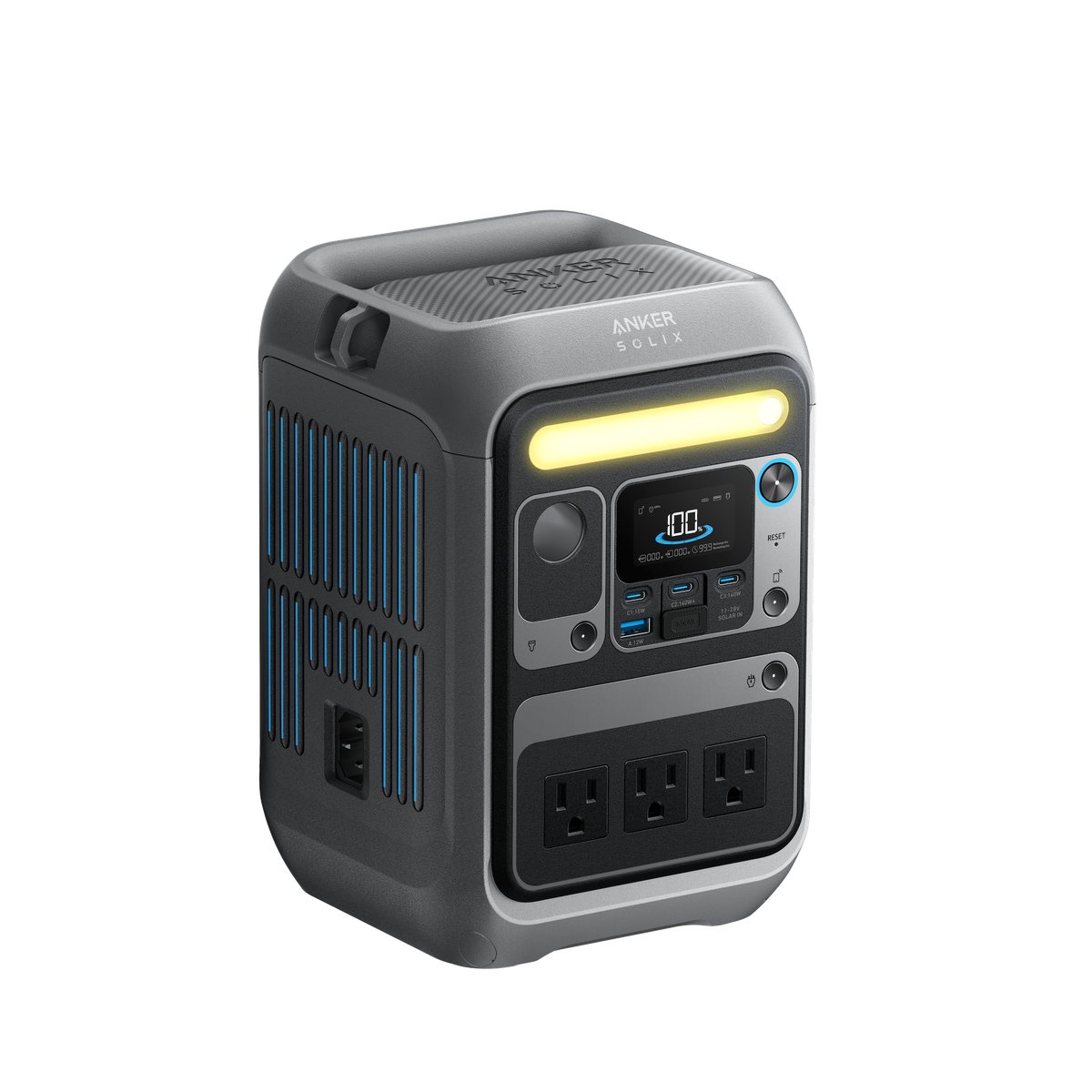
Capacity
288Wh
Main output
300W AC
Weight
9.1 lb
Solar input
up to 100W
Best fit in this guide
compact camping with AC support
Jackery Explorer 1000 v2
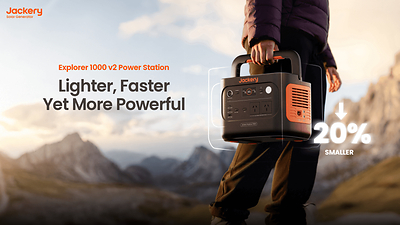
Capacity
1,070Wh
Main output
1,500W AC
Weight
23.8 lb
Solar input
up to 400W
Best fit in this guide
portable ~1kWh campsite power
BLUETTI Elite 100 V2
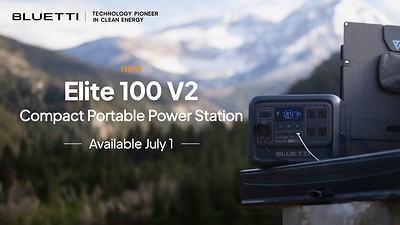
Capacity
1,024Wh
Main output
1,800W AC
Weight
about 25 lb
Solar input
up to 1,000W
Best fit in this guide
solar-heavy ~1kWh camping
BLUETTI AC180

Capacity
1,152Wh
Main output
1,800W AC
Weight
35.3 lb
Solar input
up to 500W
Best fit in this guide
heavier basecamp/off-grid use
View the full specification table
On small screens, scroll the table sideways to compare every specification.
| Product | Capacity | Main output | Weight | Solar input | Best fit in this guide |
|---|---|---|---|---|---|
| Anker SOLIX C300 DC | 288Wh | 300W DC total, no AC outlets | 6.17 lb | up to 100W | USB-C/12V-focused lightweight camping |
| Anker SOLIX C300 | 288Wh | 300W AC | 9.1 lb | up to 100W | compact camping with AC support |
| Jackery Explorer 1000 v2 | 1,070Wh | 1,500W AC | 23.8 lb | up to 400W | portable ~1kWh campsite power |
| BLUETTI Elite 100 V2 | 1,024Wh | 1,800W AC | about 25 lb | up to 1,000W | solar-heavy ~1kWh camping |
| BLUETTI AC180 | 1,152Wh | 1,800W AC | 35.3 lb | up to 500W | heavier basecamp/off-grid use |
Start with what you will actually power
For phones, cameras, lights and USB-C laptops, a compact DC-focused station can make more sense than carrying a 1kWh battery. If you need wall-plug appliances, however, a DC-only model will not replace a station with AC outlets.
The Anker SOLIX C300 DC makes that distinction clear. Anker lists 288Wh and 300W of DC output with seven ports, including two 140W two-way USB-C ports, but it has no AC outlets. The exact C300 DC model is physically much lighter than the AC-equipped C300. It is a different product, not simply a cheaper color or bundle.
The Anker SOLIX C300 keeps the same 288Wh capacity class but adds AC outlets. That makes it more flexible for chargers and small devices that still require a wall plug, while remaining far smaller than the 1kWh products.
View on Amazon: Anker SOLIX C300 (AC model) (paid link)
Jackery Explorer 300
The Explorer 300 is a compact alternative for campers who want AC outlets without moving into a 1kWh battery. Jackery lists 293Wh, a 300W pure-sine inverter with 500W surge, and support for up to six devices at once.
Jackery also lists a 2.5-hour recharge path using its wall charger plus USB-C PD input. For this guide, its role is straightforward: more established market demand than most small stations, but far less stored energy than the 1kWh class.
When a ~1kWh station makes sense at camp
A larger battery is useful when you are powering a portable refrigerator/cooler, multiple laptops and cameras, higher-draw AC gear, or staying off-grid for longer periods.
The Jackery Explorer 1000 v2 combines 1,070Wh with 1,500W rated AC output at about 23.8 lb.
View on Amazon: Jackery Explorer 1000 v2 (paid link)
The BLUETTI Elite 100 V2 is a different ~1kWh proposition. BLUETTI lists 1,024Wh, 1,800W AC output and up to 1,000W solar input. If campsite solar recovery is central to your setup, that higher manufacturer-rated PV ceiling is an important comparison point.
View on Amazon: BLUETTI Elite 100 V2 (paid link)
The BLUETTI AC180 stores 1,152Wh and delivers 1,800W AC output, but at 35.3 lb it is materially heavier. It makes more sense as a vehicle-supported basecamp station than something you expect to carry far from the car.
C300 DC vs C300: the AC-outlet decision
Do not treat these two models as interchangeable.
The C300 DC is designed around USB-C, USB-A and 12V/DC output. Anker lists 288Wh, a 300W total-output class, two 140W two-way USB-C ports, a 120W car socket and up to 100W solar input. The exact model is listed at about 6.17 lb and carries a three-year warranty.
The AC-equipped C300 adds AC output and is heavier. If any essential campsite device uses a normal wall plug, verify its wattage and choose the AC model or a larger station instead of assuming a DC-only station can power it.
Solar charging at camp
Solar input is a maximum input specification, not a promise that you will always achieve that wattage. Panel angle, clouds, temperature, cable losses and the station’s input limits all affect real charging.
For these products, the accepted manufacturer figures range from 100W on the C300/C300 DC to 400W on the Explorer 1000 v2, 500W on the AC180 and 1,000W on the Elite 100 V2.
If solar is your main recharging method, compare the station’s voltage/current limits with the exact panel configuration rather than matching panels by wattage alone.
How to size camping power without fake runtime promises
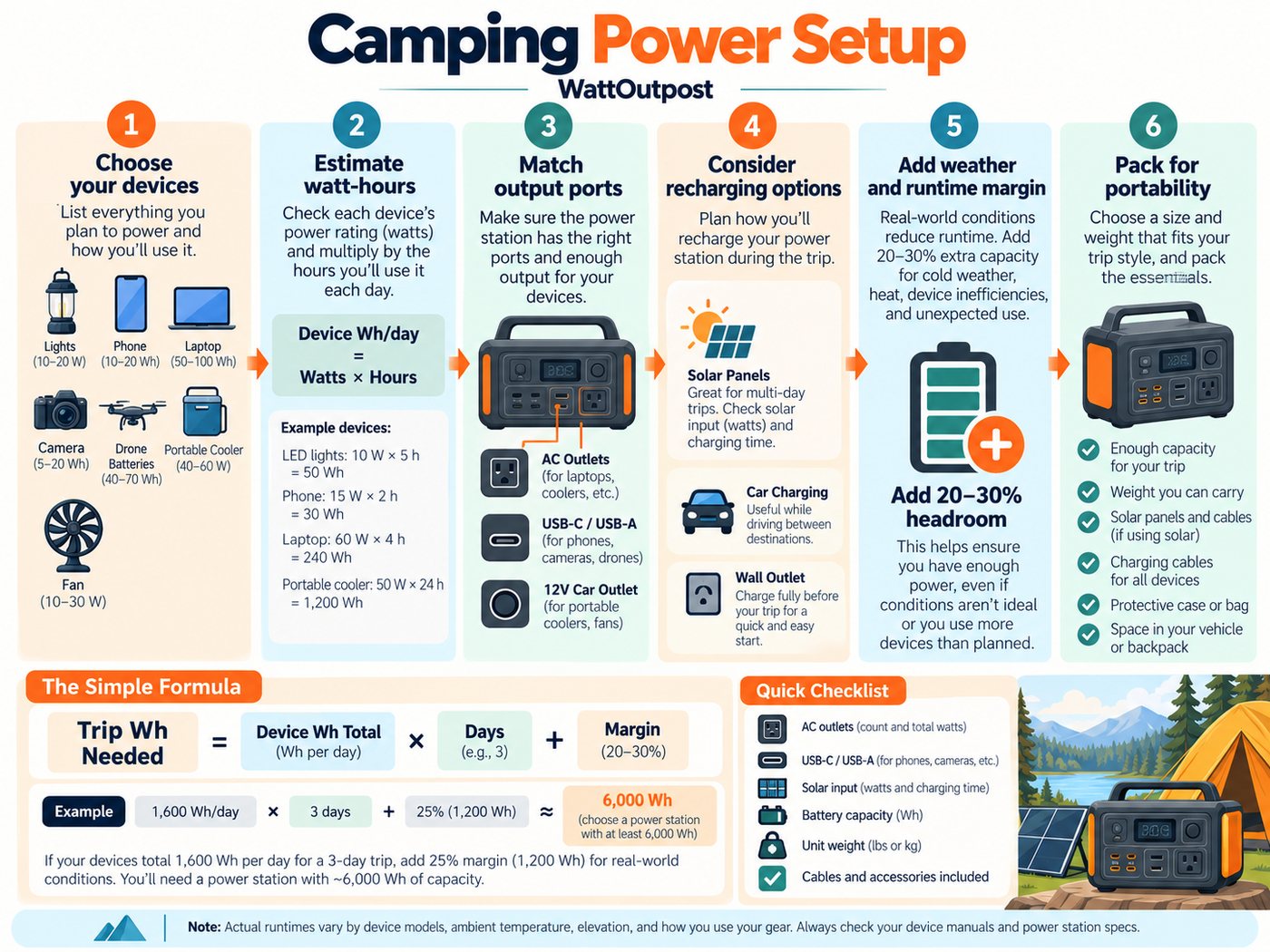
Start with an inventory of devices and their actual energy use:
- phones and cameras;
- laptops;
- lights;
- portable fridge/cooler;
- CPAP or other essential equipment;
- small cooking or heating devices.
Then separate watts from watt-hours. Watts tell you whether the inverter can supply a load at a moment in time. Watt-hours tell you how much energy is stored.
Avoid simple “battery Wh divided by appliance W” promises. Inverter losses, duty cycles, temperature and startup loads all affect runtime.
For a deeper explanation of the 1000-class shopping segment, see our 1,000W portable power stations guide.
What to prioritize for camping
Weight and form factor
If you move camp often or carry the station away from a vehicle, weight becomes a primary specification rather than a footnote.
AC versus DC-only output
A DC-only station can be excellent for USB-C and 12V gear but is the wrong tool for equipment that requires an AC wall outlet.
Solar input
Higher PV input can shorten recovery time when you have enough compatible panel capacity and good sunlight.
Quiet operation
Battery stations avoid combustion-engine noise, but fans can still run during charging or heavy loads. Use manufacturer noise claims cautiously because operating conditions differ.
Weather and storage
Portable power stations are electronics. Protect them from rain, standing water, extreme heat and freezing conditions outside their stated operating/storage ranges.
FAQ
What size portable power station is good for camping?
There is no universal size. Short trips focused on phones, lights and laptops can fit a few-hundred-Wh class. Refrigeration, medical devices, longer stays or multiple AC loads can justify moving toward 1kWh or more.
Is a 300Wh power station enough for camping?
It can be for light electronics and short trips. It may be too small for long-running refrigeration or multiple AC appliances. Check both stored energy and output requirements.
Do I need AC outlets when camping?
Only if your gear requires them. USB-C and 12V devices can work well with a DC-only station, but wall-plug equipment requires an AC-capable station.
Can I charge a camping power station with solar panels?
Yes, when the panel voltage/current falls within the station’s supported input range. Maximum solar wattage alone is not enough to determine compatibility.
Should I buy the largest battery I can afford?
Not automatically. Larger stations can offer longer runtime and higher output but add weight, bulk and cost. Match the battery to the trip.
Choose for your needs
For camping, choose the smallest station that safely covers your real loads with adequate runtime margin and charging options. Compact DC-only power can be ideal for USB-C-heavy kits, while a ~1kWh AC station is more suitable when the campsite includes refrigeration, multiple devices or higher-draw equipment.
For broader comparisons, see our best portable power stations comparison.
Related guides: portable power stations for home backup and 1,000W portable power stations
Sources
Technical specifications come from current official manufacturer pages and support documentation:
- Anker SOLIX C300, https://www.ankersolix.com/products/c300
- Anker SOLIX C300 DC, https://www.ankersolix.com/products/c300-dc
- Jackery Explorer 300, https://www.jackery.com/products/explorer-300-portable-power-station
- Jackery Explorer 1000 v2, https://www.jackery.com/products/jackery-explorer-1000-v2
- BLUETTI Elite 100 V2, https://www.bluettipower.com/products/elite-100-v2-portable-power-station
- BLUETTI AC180, https://www.bluettipower.com/products/ac180