
As an Amazon Associate I earn from qualifying purchases.
When people search for the highest-capacity portable power station, they are usually comparing two different things: the battery built into the main unit and the much larger capacity available after adding expansion batteries. Those are not the same measure.
Last updated October 9, 2026. Specifications come from current manufacturer documentation and are not presented as hands-on testing. See our editorial and research methodology.
This guide compares five large portable power stations by built-in battery capacity first, then looks at AC output, expandability and practical portability. The goal is to show where the 2kWh, 3.5kWh and 4kWh classes differ without treating the largest number as automatically the best choice.
Quick answer: which portable power station has the highest capacity?
Among the five models compared here, the EcoFlow DELTA Pro 3 has the largest built-in battery at 4,096Wh, followed by the Jackery HomePower 3600 Plus at 3,584Wh. The remaining three are in the 2kWh class.
That does not mean 4,096Wh is the largest portable battery system available. Expandable systems can reach far higher total capacities by adding external batteries or multiple units. For fair comparison, this page separates built-in capacity from expanded system capacity.
Five high-capacity portable power stations compared
EcoFlow DELTA Pro 3
Built-in capacity
4,096Wh
Rated AC output
4,000W
Expandable capacity
12kWh with one unit; larger multi-unit systems supported
Portability note
wheeled high-output home/RV class
Jackery HomePower 3600 Plus
Built-in capacity
3,584Wh
Rated AC output
3,600W
Expandable capacity
manufacturer ecosystem dependent
Portability note
about 35kg / 77lb
Anker SOLIX C2000 Gen 2
Built-in capacity
2,048Wh
Rated AC output
2,400W
Expandable capacity
up to about 4kWh with expansion battery
Portability note
41.7 lb
EcoFlow DELTA 3 Max
Built-in capacity
2,048Wh
Rated AC output
2,400W
Expandable capacity
ecosystem dependent
Portability note
about 44.8 lb
Anker SOLIX S2000
Built-in capacity
2,010Wh
Rated AC output
1,500W
Expandable capacity
not the focus of this model
Portability note
about 35.7 lb
View the full comparison table
| Model | Built-in capacity | Rated AC output | Expandable capacity | Portability note |
|---|---|---|---|---|
| EcoFlow DELTA Pro 3 | 4,096Wh | 4,000W | 12kWh with one unit; larger multi-unit systems supported | wheeled high-output home/RV class |
| Jackery HomePower 3600 Plus | 3,584Wh | 3,600W | manufacturer ecosystem dependent | about 35kg / 77lb |
| Anker SOLIX C2000 Gen 2 | 2,048Wh | 2,400W | up to about 4kWh with expansion battery | 41.7 lb |
| EcoFlow DELTA 3 Max | 2,048Wh | 2,400W | ecosystem dependent | about 44.8 lb |
| Anker SOLIX S2000 | 2,010Wh | 1,500W | not the focus of this model | about 35.7 lb |
Important: battery capacity in watt-hours tells you how much energy is stored. AC output in watts tells you how much power the inverter can deliver at one time. A larger battery does not automatically mean a higher-output inverter, and a high-output inverter does not automatically mean longer runtime.
What counts as a high-capacity portable power station?
There is no formal industry cutoff, but for shopping purposes the 2kWh class and above is a useful boundary. Stations around 2,000Wh are substantially larger than the 1kWh models commonly used for camping and light backup, while 3.5–4kWh units begin to overlap with home-backup systems rather than simple carry-around batteries.
As capacity rises, portability changes too. A 2kWh station around 35–42 lb can still be lifted by many users. A 3.5–4kWh station may weigh much more and rely on wheels or fixed placement. “Portable” therefore ranges from carryable to movable.
EcoFlow DELTA Pro 3: highest built-in capacity in this comparison
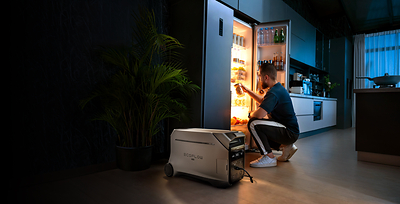
EcoFlow lists the DELTA Pro 3 with a 4,096Wh LFP battery and 4,000W continuous AC output. A single unit can expand to 12kWh with extra batteries, while larger multi-unit configurations go substantially higher.
This is the most capable option here when your priority is maximum built-in energy plus 120/240V output and a path toward a much larger home-backup system. The tradeoff is that this is no longer a lightweight carry-by-the-handle product; it belongs in the wheeled portable/home-energy category.
Jackery HomePower 3600 Plus: 3.6kWh-class battery with 3,600W output
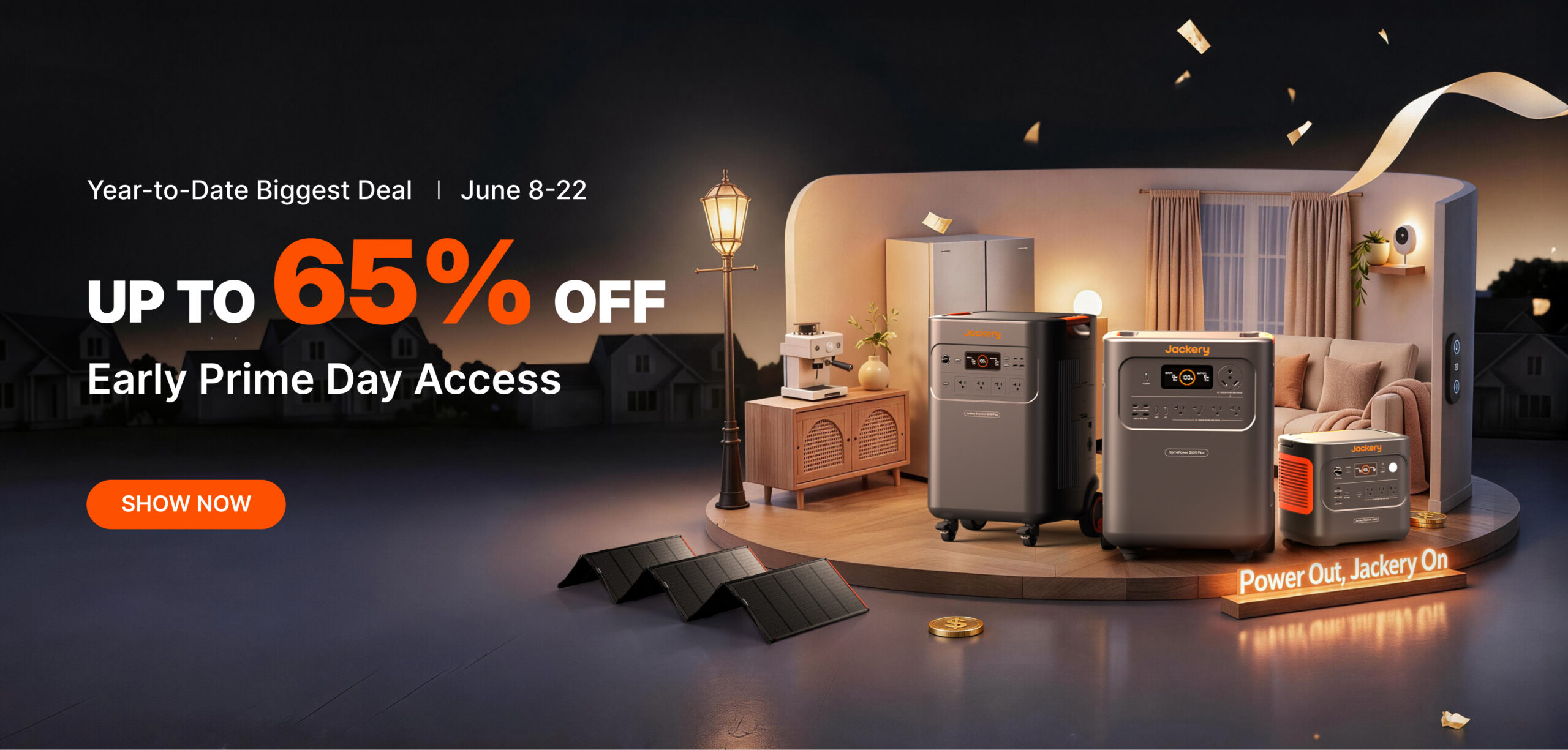
Jackery lists the HomePower 3600 Plus at 3,584Wh with 3,600W rated AC output and 7,200W maximum instantaneous output. Jackery’s technical documentation lists the unit at about 35kg, or roughly 77 lb.
That puts it between the 4kWh DELTA Pro 3 and the 2kWh class below. It provides materially more built-in energy than a 2kWh station without moving all the way to EcoFlow’s 4,096Wh base capacity.
Anker SOLIX C2000 Gen 2: expandable 2kWh option with 2,400W output
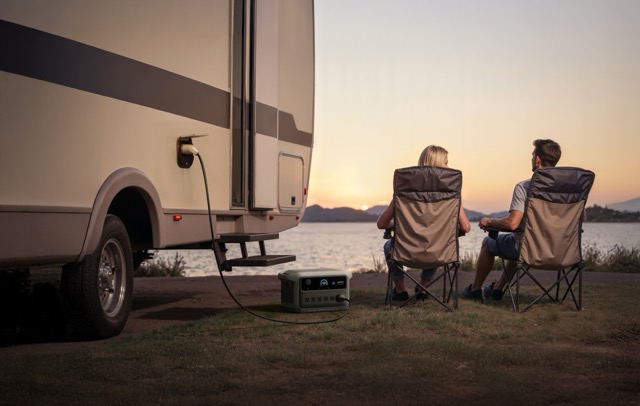
Anker lists the C2000 Gen 2 at 2,048Wh and 2,400W continuous AC output, with up to 4,000W peak power. It weighs about 41.7 lb and can expand to roughly 4kWh with the BP2000 Gen 2 expansion battery.
The C2000 Gen 2 is useful for buyers who want a carryable 2kWh base unit but still want a supported expansion path. Its built-in capacity is much smaller than the DELTA Pro 3, but its weight and physical footprint are correspondingly easier to manage.
EcoFlow DELTA 3 Max: 2kWh high-output choice
EcoFlow lists the DELTA 3 Max at 2,048Wh with 2,400W rated AC output. EcoFlow’s X-Boost 3.0 mode is marketed for selected loads up to 3,400W, but that manufacturer-specific operating mode should not be treated as a conventional inverter surge rating.
The station weighs about 44.8 lb and supports up to 500W solar input. In this comparison, its role is a 2kWh-class option with strong ordinary AC output while remaining far smaller than the DELTA Pro 3 home/RV class.
Anker SOLIX S2000: 2kWh energy with a lower output ceiling
Anker lists the SOLIX S2000 at 2,010Wh and 1,500W AC output, with up to 400W solar input. It weighs about 35.7 lb.
Its battery capacity is close to the other 2kWh models, but its 1,500W inverter is materially lower than the 2,200W and 2,400W alternatives above. It therefore makes more sense when runtime matters more than powering high-wattage appliances.
Built-in capacity vs expandable capacity
Expandable capacity can make product comparisons misleading. A 2,048Wh station that accepts extra batteries may eventually store more energy than a non-expandable 4,096Wh station, but only after additional hardware is purchased and connected.
- Built-in capacity is the fairest apples-to-apples number for the main power station.
- Expandable capacity matters when you are building a longer-duration home or RV system.
- Output power determines which appliances can run, not how long they run.
- Weight and wheels determine whether a high-capacity system is realistically portable for you.
How much runtime does 2kWh or 4kWh really provide?
A simple theoretical runtime estimate is battery watt-hours divided by average load watts. A 2,000Wh battery powering a constant 500W load has a theoretical upper bound of about four hours. A 4,000Wh battery doubles that to about eight hours before losses.
Actual AC runtime is lower because of inverter losses, battery reserve, temperature, idle consumption and changing appliance loads. Refrigerators, furnaces and pumps also cycle rather than running continuously, so their real-world average demand may be far below their momentary running wattage.
When a high-capacity station is worth the extra size
- Home outages: longer runtime for refrigerators, networking, lighting and selected household loads.
- RV use: more stored energy for appliances and longer periods away from hookups.
- High-demand tools: larger inverters can support equipment that smaller stations cannot.
- Solar storage: larger batteries can absorb more daytime solar energy for use later.
- Expandable backup systems: some platforms can grow from a portable station into multi-battery home storage.
If your loads are modest, a 1kWh station may be easier to carry and cheaper to recharge. See our 1,000W portable power station guide for that class. For outage-specific planning, see our home-backup guide.
FAQ
What is the highest-capacity portable power station?
There is no single permanent answer because manufacturers release new systems and many models accept expansion batteries. Among the five models compared here, the EcoFlow DELTA Pro 3 has the largest built-in battery at 4,096Wh.
Is 2,000Wh considered high capacity?
Yes for a portable power station. Around 2kWh is a practical high-capacity starting class and represents roughly twice the stored energy of a typical 1kWh station.
Is 4kWh twice as good as 2kWh?
Not necessarily. It stores roughly twice the energy, but output power, recharge rate, weight, ports, expansion support and your actual loads can matter just as much.
Do I need an expandable power station?
Only if you expect your energy-storage needs to grow. Expansion support can be valuable for home backup and RV use, but a self-contained station is simpler if the built-in battery already covers your target runtime.
Bottom line
If maximum built-in energy is the goal, the EcoFlow DELTA Pro 3 leads this five-model comparison at 4,096Wh, followed by the Jackery HomePower 3600 Plus at 3,584Wh. The 2kWh class is much easier to move and still provides substantial stored energy, with the Anker C2000 Gen 2 offering expandability, the EcoFlow DELTA 3 Max emphasizing 2,400W rated AC output in a 2,048Wh package, and the Anker SOLIX S2000 prioritizing battery capacity over inverter output.
Related guides: 1,000W portable power stations, portable power stations for home backup, best portable power station for refrigerator backup, and our best portable power stations comparison.
Sources
- EcoFlow DELTA Pro 3: EcoFlow product specifications
- Jackery HomePower 3600 Plus: Jackery technical information
- Anker SOLIX C2000 Gen 2: Anker SOLIX product specifications
- EcoFlow DELTA 3 Max: EcoFlow product specifications
- Anker SOLIX S2000: Anker SOLIX product specifications